

About 2025 festival
Ideas. Creating and Destroying
This year’s festival encourages us to think about the power of ideas. Ideas can create new meanings or destroy old ways of thinking.
Ideas can be simple or complicated. They affect how we see the world, how we act in relationships, and how we build cultures and institutions. Some people are free, while others are not. Art is the place where these changes can be seen. Destruction does not always mean the end, and creation is not just fixing something back the way it was. These two processes work together, leading to resilience and poetic expression.
The 2025 IPMA Festival talks about one of the most important questions of our time: how ideas affect our shared and personal experiences—how they influence memory, language, the body, and the choices we make every day. This is not just an aesthetic inquiry, but an existential one. It shows art not as an escape from the world, but as a way to actively think about, feel, and reimagine it.
Through exhibitions, talks, and encounters, visitors are invited not only to observe but to engage—to think about the impact of ideas, their power to transform or shake up what we take for granted. The artists in the show have different creative ideas that represent today’s conflicts. These conflicts include censorship, the good and bad aspects of technology, how easily history can be forgotten, and the possibility of new shared ideas.
The festival brings together artists who are already well-known around the world and artists who are just starting out. The works presented here range from deep explorations of ideas to personal stories with a visual style.
This year’s theme is not a conclusion, but a proposal; not an answer, but a starting point. It encourages audiences to think with ideas, to feel their presence, and to recognize their imprint in both art and everyday life. In the end, it reminds us that every idea can be either a force for good or a force for evil.
Svetlana Batura. Artistic Director and Curator of the IPMA Festival
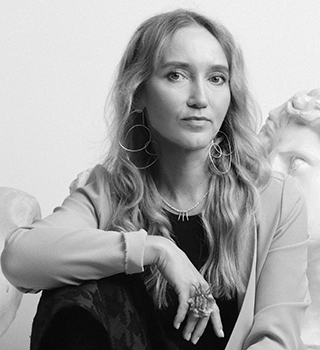
Svetlana Batura
Svetlana Batura is a lecturer, curator, photographic artist and photography researcher, as well as the founder, artistic director and curator of the International Photography and Media Art Festival IPMA. At the Arts Academy of Kauno kolegija HE Institution, she teaches photography and coordinates international projects. Her professional practice encompasses contemporary photography curation, international cultural and academic collaboration, photography education and research into photographic archives. Batura studies interwar photographic heritage and the Giedraičiai photographic archive discovered in Kaunas. Together with Eglė Petreikienė, she co-edited the publication Nemuno veidai. 24 maišto metai (2025), dedicated to the photographic archive of the cultural magazine Nemunas and its place in Lithuanian visual culture. At the IPMA Festival, she shapes the overall artistic direction, curates the festival programme and develops its international partnerships.Participants
Carine Dolek
FranceValentyn Odnoviun
LithuaniaJudith Nangala Crispin
AustraliaClaudia Fuggetti
ItalyPoulomi Basu
IndiaLesia Pcholka
BelarusAlvydas Lukys
LithuaniaVisvaldas Morkevičius
LithuaniaVilius Juozapas Vingras
LithuaniaLaurynas Mataitis
LithuaniaValentin Rajenkov
LithuaniaŽilvinas Baranauskas
LithuaniaZed Nelson
United KingdomAnnija Mangale
LatviaCarlos Del Rio
SpainIeva Gailė
LithuaniaJoanna Szproch
GermanyMatteo Giardiello
ItalyZexuan Zeng
Germany


Ideas are invisible yet fundamental forces. They precede every gesture, every word, every work. They can emerge in silence or tumult, born of a vital need or a fleeting intuition. They shape our perception of the world and determine how we act in it. Even before creation, there is the idea. And sometimes, it is already a revolution.
Human history is made up of ideas that have built, but also destroyed. The greatest technological advances, emancipation movements, and the most subversive artistic expressions have all emerged thanks to an idea. Conversely, domination, exclusion, and systemic violence have often been justified, supported, or perpetuated by other, more obscure but equally powerful ideas.
We also live through the ideas we form of one another: representations, stereotypes, judgments, or projections shape human relationships, often without our knowledge. The identities we assign, the roles we expect, the fears we harbor—all of this is born from ideas that are shared, transmitted, and sometimes imposed. Similarly, political regimes, social structures, and collective beliefs function as systems of ideas that guide individual and collective trajectories. It is these ideas that draw the boundaries of our freedoms, define norms, justify inequalities—or challenge them.
In the world of artistic creation, ideas act as starting points and revealers. They inform forms, guide choices, and challenge our perspective. A work of art is never neutral: it carries within it a vision, a position, whether conscious or not. It can liberate, provoke, heal, but also challenge, trouble, or disturb.
To question the influence of ideas is therefore to question the way we think and act—and how art can make this visible. It explores the constant tension between creation and destruction, between the impulse to create meaning and the impulse to deconstruct certainties.
The theme “Ideas: Creating and Destroying” reminds us that every image, every sound, even every silence, can be transformative. For behind every act of creation, there is an idea. And sometimes, it’s that idea that changes everything.
Carine Dolek. Curator of the International Invited Artists Section at the 2025 IPMA Festival
This year’s IPMA Photography Festival theme is Ideas. Constructive and Destructive, From the curator’s view, destruction is not approached here as a terminal act, nor construction as its remedy; instead, both are understood as states within broader material and cultural processes, where absence and presence, silence and signal, decay and renewal coexist and co-generate.
Rather than positioning creation solely as a response to loss, this section highlights how artists engage with the forces, materials, and systems that shape meaning in times of collapse. Ideas take form through resistance to erasure and frictions among unstable elements: industrial waste, archival gaps, sonic residue, irradiated surfaces. These materials do not passively await transformation—they are mobilised, interpreted, and recontextualised by artistic interventions. They resonate with memory, constraint, and unrealised potential.
What emerges is not resolution, but situated forms of knowledge—provisional, often fragile, yet deliberate. The works presented here demonstrate how knowledge can be constructed from within destruction: through distortion, repurposing, or exposure. The constructive is thus not a reversal of the destructive, but coexistent with it, folded into the same field of becoming, where critical insight and poetic gesture meet.
The Lithuanian section brings together five voices whose work shows how making and breaking are never entirely separate.
- Visvaldas Morkevičius turns a sheet of riveted aluminium into something that looks like both armour and target, asking how bodies are shaped—and sometimes sacrificed—by power.
- Valentin Rajenkov brings a small reading room instead of a traditional artwork, arguing that building a shared space is a creative reply to closing public libraries.
- Vilius Juozapas Vingras invites visitors to dine from uranium-glazed plates, confronting us with the double life of nuclear energy as both progress and threat.
- Laurynas Mataitis revives the Cold War bootlegs known as “music on bones,” where forbidden songs were cut into X-ray film, proving that censorship can spread the very culture it tries to crush.
- Žilvinas Baranauskas photographs Soviet-era concrete blocks affectionately, showing that decay can keep memory alive.
They remind us that every shield carries the memory of a wound, every archive hints at absence, and every new technology leaves a trace we cannot yet measure.
These projects show that creation and destruction are entangled gestures, rooted in the same ground from which resistance, risk, care, and nostalgia grow.
Valentyn Odnoviun. Curator of the Lithuanian Invited Artists Section at the 2025 IPMA Festival
The 2025 IPMA International Photography and Media Art Festival team:
Curator of the International Invited Artists Section at the 2025 IPMA Festival: Carine Dolek
Curator of the Lithuanian Invited Artists Section at the 2025 IPMA Festival: Valentyn Odnoviun
Artistic Director and Curator: Svetlana Batura
Design Solutions: Aurimas Mickus
Texts, Translations, and Communication: Ieva Klimaitė
Exhibition Architecture: Sigita Simona Paplauskaitė
Exhibition Installations: Irmantas Kuskys
Communication: Irutė Tumaitė
Video, Animation: Mindaugas Arlinskas
Exhibition Photo Documentation: Sebastijonas Petkus
Photo Printing: Foto123
IPMA Creative Team: Žilvinas Glušinskas, The students and professors of the Photography Program at the Art Academy of Kaunas Kolegija
© Festival associative photos by Judith Nangala Crispin.
FESTIVAL ORGANIZERS


FESTIVAL SPONSOR


FESTIVAL PARTNERS





THE PROJECT IS FINANCED BY
