About the Festival
Sometimes it seems that CONNECTION is a simple thing.
A person beside you. A glance. A conversation. A memory that suddenly returns so vividly, as if it had happened yesterday. A place where, upon entering, the body itself recognises where it is. A voice on the phone. A hand on the shoulder. An image that, for a moment, brings you back to a past instant.
Sometimes connection is felt through habits we do not even notice. Through inherited fears. Through language, with which we try to express what does not always yield to words. Through natural processes of which we are always a part, even when we choose to pretend that we are merely observers from the outside. Through technologies that bring us closer while, at the same time, taking away some essential element. Through such an all-encompassing closeness of another person that you no longer know where your own being ends and theirs begins.
This year, the IPMA Festival invites us to look closely at precisely these connections: the ones that emerge, endure, break apart, change direction, appear with great clarity, or sometimes remain barely perceptible.
As every year, in 2026 the IPMA exhibition brings together, in one space, works by artists from Lithuania and other countries around the world. Some speak of human closeness. Others address the vulnerability of the body, the entanglement of nature and culture, memory, cultural codes, and the dependencies created by technologies. At first glance, each work seems to be looking in a different direction. Towards a different experience. Towards a different point of sensitivity. What is especially interesting is each artist’s attempt to interpret connection, to understand it, to grasp it, to reveal it. And yet it is no less important to try to understand not only each work separately, but also the connection that arises between them: between images that unexpectedly echo one another; between themes that begin to complement or contradict each other; between tensions, resonances, and coincidences.
At the IPMA Festival, Connections becomes an open question: how do you experience and understand connections when you are in between? When you are connected. To a person. To an image. To a body. To a place. To what is alive, and to what we still call inanimate.
Svetlana Batura. Artistic Director and Curator of the IPMA Festival
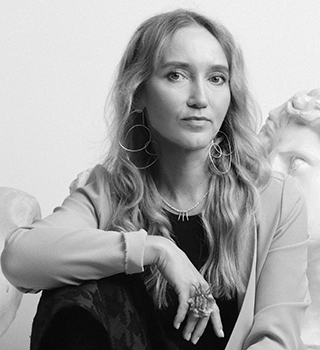
Svetlana Batura
Svetlana Batura is a lecturer, curator, photographic artist and photography researcher, as well as the founder, artistic director and curator of the International Photography and Media Art Festival IPMA. At the Arts Academy of Kauno kolegija HE Institution, she teaches photography and coordinates international projects. Her professional practice encompasses contemporary photography curation, international cultural and academic collaboration, photography education and research into photographic archives. Batura studies interwar photographic heritage and the Giedraičiai photographic archive discovered in Kaunas. Together with Eglė Petreikienė, she co-edited the publication Nemuno veidai. 24 maišto metai (2025), dedicated to the photographic archive of the cultural magazine Nemunas and its place in Lithuanian visual culture. At the IPMA Festival, she shapes the overall artistic direction, curates the festival programme and develops its international partnerships.Participants
Wiktoria Michałkiewicz
PolandTomas Pabedinskas
LithuaniaAnders Petersen
SwedenCooper & Gorfer
SwedenInka & Niclas
SwedenMichał Łuczak
PolandEvelyn Bencicova
SlovakiaSamson G Balfour Smith
FranceMartin Tscholl
GermanyOsheen Harruthoonyan
CanadaHenriette Sabroe Ebbesen
DenmarkDarius Žiūra
LithuaniaŽilvinas Glušinskas
LithuaniaArnis Balčus
LatviaArtūras Morozovas
LithuaniaMonika Požerskytė
LithuaniaLuisa Greta Vilo
EstoniaŠarūnas Kvietkus
LithuaniaRomualdas Pocevičius
LithuaniaJānis Daugavietis
LatviaPeeter Linnap
EstoniaGytis Dovydaitis
LithuaniaMonika Dirsytė
LithuaniaVincas Alesius
LithuaniaGuy Livneh
USA


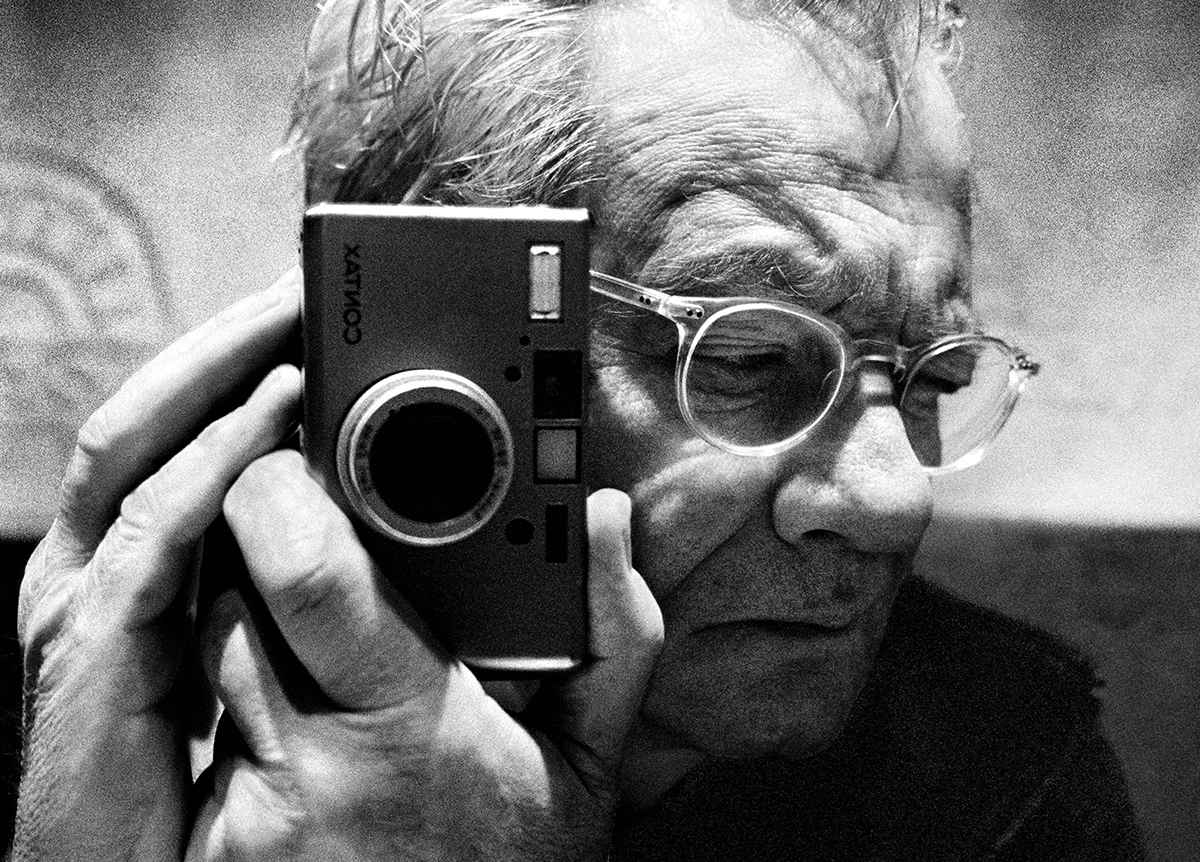







Assemblage of Connections
By Dr. Wiktoria Michalkiewicz
Forest ecologist Suzanne Simard, who spent more than thirty years studying Canada’s forests, found that trees and plants communicate with one another, support each other in times of hardship, and share nutrients. This takes place through a hidden underground network of connections whose complexity rivals that of the neural networks in the human brain. Just as every nerve in the human body contributes to the well-being of the whole organism, each tiny root – no thicker than a strand of hair – plays a vital role in the health of the forest as a living system. This specialized mode of communication is known as the “mycorrhizal network.”
We, as humans, discover phenomena and species as though their existence required validation through the names we assign to them. Perhaps it would be more accurate to say that Simard did not “discover” this phenomenon, but rather described it in the language of science – a phenomenon that was self-evident to our ancestors: their survival depended on nature, and so they had to learn how to read it.
In many cultures around the world, this valuable knowledge remains alive. Yet we no longer observe nature closely enough to recognize the evidence that cooperation and ever greater diversity make it possible to create the best and most sustainable solutions. The world is a network of communication, revealing itself to those who care to read it. Through observation, we come to understand that what we call discovery has in fact been taking place for millions of years and is entirely ordinary. Interspecies cooperation and complex networks of interdependence are ordinary. So, too, is the coexistence of elements we tend to regard as opposites.
Local communities have always maintained a respectful and humble relationship with the living world and its wholeness. By contrast, those regions in which the Enlightenment worldview took hold – the worldview that gave rise to the idea that the world can be understood by breaking it down into separate parts and studying them in isolation – are today compelled to reconsider their assumptions. Reductionist thinking has blinded us: we failed to see that all parts exist and are defined only through their relationship to one another. This shift means recognizing the complexity of the world, making an effort to understand the perspective of the other, and accepting that there is no “end of history” (Fukuyama) – only the longue durée (Braudel).
The artists invited to participate in this year’s IPMA edition explore the connections between human, non-human, and post-human worlds. At the center of these reflections lies the question of what it truly means to be human at a time when life on our planet is undergoing irreversible change before our eyes, while the human impact on these transformations is further accelerated by political and social ruptures. According to scientific data, species living in the wild today account for only 4 percent of the Earth’s total mammalian biomass. Over the past decades, an immeasurable number of species have disappeared, and this process will continue. Post-human relations, shaped by the expansion of artificial intelligence, compel us to rethink the limits of human potential and humanity’s long-standing dominance. Under such conditions, how can we reimagine our world – not by breaking it into separate parts and examining them in isolation, but by drawing on ideas of coexistence and kinship among beings?
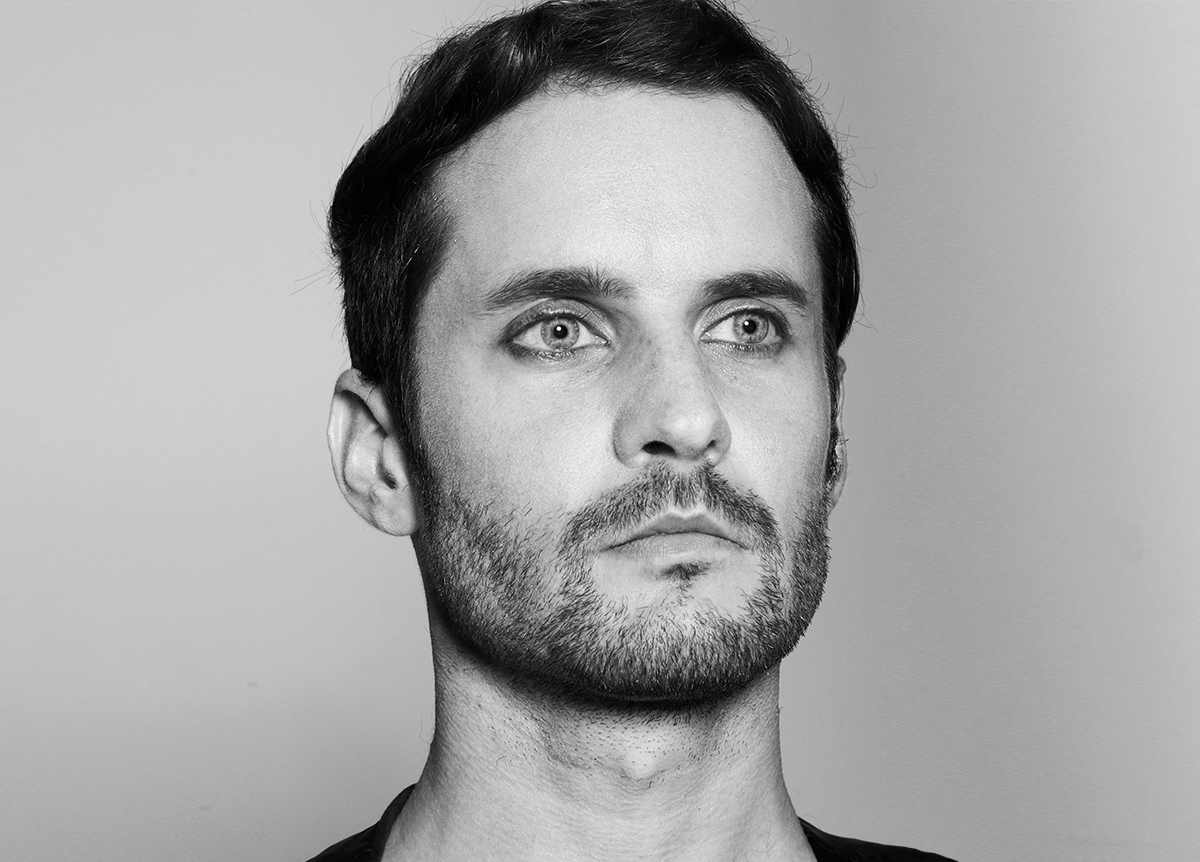
(Im)Possible communal bonds
Dr. Tomas Pabedinskas
Today’s society is becoming increasingly polarized and fractured. On the one hand, this is due to military conflicts, the tense political situation around the world and other objective circumstances that force people to choose sides and do not leave room for more moderate positions. On the other hand, the objective perception of reality, as the basis for communication between different groups in society and individuals, has dissolved in a post-truth era, in which personal beliefs and subjective, emotionally driven narratives have become more important than facts.
Confronting issues that divide people in society and in personal relations often does not help to resolve them, but on the contrary, once again reinforces or even deepens the existing divisions. Finding common ground may require taking a roundabout path – shifting our attention away from what divides us and toward what different social groups and seemingly incompatible interpretations of the world have in common. A response to polarization may lie in the relationships formed within small communities, cultural groups, niche interpersonal networks, and other forms of human connection.
Therefore, one section of the 2026 IPMA festival invites us to explore the roles of photographers and photography in communities, which can take many different forms: artists can belong to the communities they photograph; create, support and strengthen communities through their own activities and photographs; tell stories about communities from outsider’s position, without belonging to them; travel and move between different geographical, cultural, and social environments, discovering related, similar communities.
Of course, such photography does not offer and, perhaps, does not have to offer, solutions to painful and urgent problems, but it shows or creates circumstances and situations in which, even if only temporarily and within limits, a common basis for communication can be formed and human bonds can be renewed.
The 2026 IPMA International Photography and Media Art Festival team:
Curator of the International Invited Artists Section at the 2026 IPMA Festival: Dr. Wiktoria Michalkiewicz
Curator of the Lithuania and Baltic Countries Invited Artists Section at the 2026 IPMA Festival: Dr. Tomas Pabedinskas
Festival Artistic Director and Curator: Svetlana Batura
Design Solutions: Aurimas Mickus
Texts, Translations, and Communication: Ieva Klimaitė
Exhibition Architecture: Sigita Kundrotaitė
Exhibition Installations: Irmantas Kuskys
Video, Animation: Mindaugas Arlinskas
Exhibition Photo Documentation: Sebastijonas Petkus, Gustina Keturakytė
Photo Printing: Foto123
IPMA Creative Team: Žilvinas Glušinskas, The students and professors of the Photography Program at the Art Academy of Kaunas Kolegija
IPMA Festival Senior Ambassadors Coordinator: Viktorija Starkauskienė
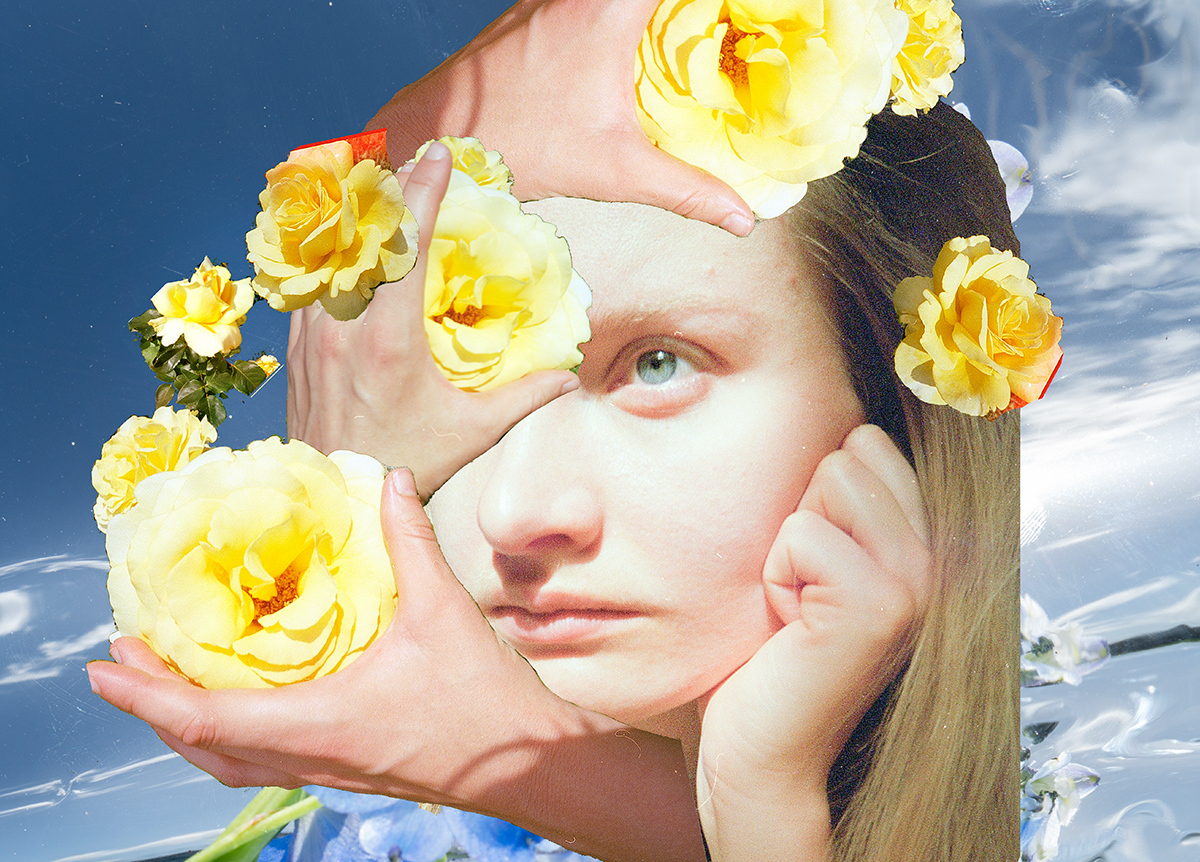
© Festival associative photos by Cooper & Gorfer.
FESTIVAL ORGANIZED BY


FESTIVAL FINANCED BY


FESTIVAL PARTNERS







MEDIA PARTNERS